

Three Apples
Adam, Newton, and Jobs

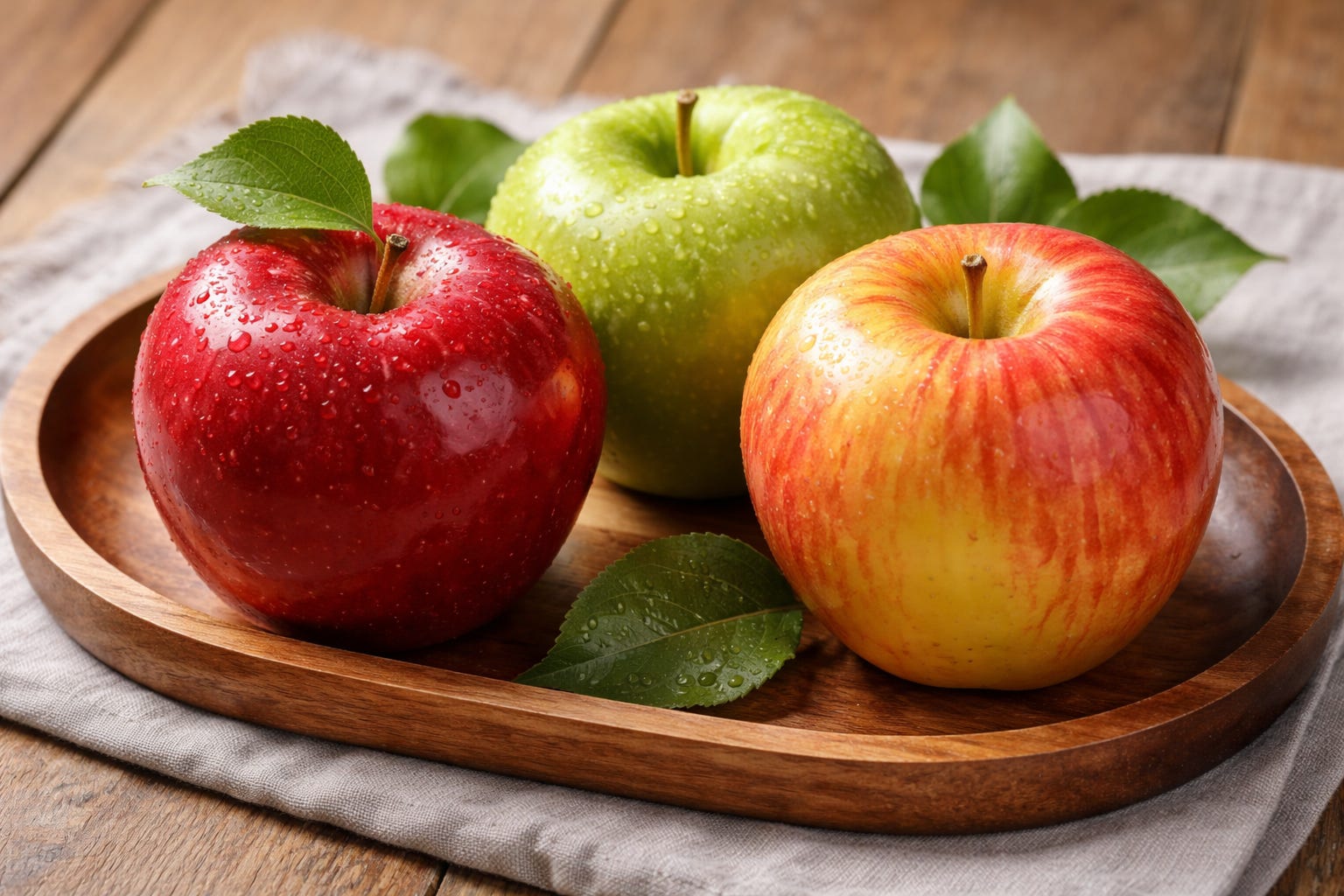
Three of the most famous apples in human history appear in three very different stories. One is the apple in the Garden of Eden. Another is the apple Isaac Newton watched fall from a tree. The third is the glowing apple on the devices created by Steve Jobs and Apple.
Each apple represents a moment of awakening—moments when human beings began to see the world in new ways.
In the story of Adam in the Garden of Eden, the fruit symbolizes the beginning of moral knowledge. Adam and Eve lived in innocence until they partook of the fruit of the tree of knowledge of good and evil. Their choice opened their eyes. They became aware, responsible, and capable of acting with agency. In the scriptural account, this moment marks the beginning of human history as a story of choice, learning, and progression. Humanity enters a world where we must think, decide, create, and grow.
Newton’s apple represents a different kind of awakening. As the story is often told, Newton watched an apple fall from a tree and wondered why it fell straight toward the earth. From this observation, he developed the law of gravity, one of the most powerful ideas in the history of science. Newton revealed that the universe operates according to discoverable laws. The same force that pulls an apple to the ground also governs the motion of the moon and planets.
The two apples, therefore, point to two different dimensions of knowledge. Adam’s apple reveals the beginning of human agency—the capacity to choose and to act. Newton’s apple reveals the laws that govern the physical universe. One story explains the awakening of moral and creative intelligence; the other explains the structure of the material world.
But a third apple enters the story.
In 1976, two young entrepreneurs, Steve Jobs and Steve Wozniak, started a small company in a California garage. They chose a simple name: Apple. Over the following decades, the glowing apple logo would appear on devices that placed extraordinary computing power into the hands of ordinary people.
This third apple represents the application of knowledge through human creativity.
Jobs did not discover new laws of physics, nor did he introduce a new moral code. Instead, he combined existing knowledge—microprocessors, software, design, and communication—into products that transformed how billions of people learn, work, create, and communicate. The iPhone alone placed a camera, a computer, a library, a map, and a communications network into a device that fits into a pocket.
The Apple of Steve Jobs symbolizes the entrepreneurial act: the moment when human imagination organizes knowledge into new forms that expand what people can do.
Human progress emerges from the interaction of these three forces.
We live in a lawful universe revealed by science. We possess the agency revealed in the story of Adam. And through entrepreneurship and innovation, we continually transform knowledge into new tools, new possibilities, and new forms of prosperity.
Seen together, the three apples tell the story of progress.
Adam’s apple represents agency—human beings capable of choice and moral responsibility.
Newton’s apple represents law—a universe governed by intelligible and discoverable principles.
Jobs’s apple represents creation—the ability of free minds to organize knowledge into technologies that expand human possibility.
The three apples reveal a deeper truth.
Human beings are not passive objects in a deterministic machine. We are agents living in an intelligible universe, capable of discovering its laws and using knowledge to create new worlds of possibility.
The first apple opened the human mind.
The second apple revealed the laws of the universe.
The third apple placed the power of knowledge into billions of hands.
And the real miracle is this: there are infinitely more apples yet to be discovered.
This article first appeared in Meridian Magazine. Dr. Gale Pooley will be speaking on “Superabundance” at the Warriors of Teancum Men’s Retreat hosted by Cwic Media August 13-15, 2026.
About The Author
Dr. Gale Pooley is an economist, professor, and co-author of the award-winning book, Superabundance. He has taught at six universities worldwide. His work has appeared in the Wall Street Journal, The Economist, and C-Span. He also co-authored the Simon Abundance Index and the Pooley-Tupy Theorem. He is a Senior Fellow at the Discovery Institute and a scholar with the Cato Institute and HumanProgress.org
 | A guest post by
|